A white farmhouse, open to the fields.
In Compton, in the Eastern Townships: two breeds, one approach, and a rule that has never changed — never more puppies than we can know by name.
It started with a female we never planned to breed.
Praline, our first Australian Labradoodle, had a temperament our veterinarian called remarkable — steady, curious without being pushy, endlessly gentle with the neighbourhood kids. After two years of health testing, he was the one who suggested she deserved a litter.
That first litter taught us the essential lesson: the difference between a puppy handled daily, outdoors, and one that spent eight weeks in a pen never fully closes. You can still see it at five years old.
Today, we still raise our litters outdoors. Puppies discover the grass, the porch and the sounds of the barn before their eyes are even fully open, and we know them well enough to know exactly which family each one belongs with.
Two breeds, and nothing else.
We don't diversify. Knowing two bloodlines well beats skimming across eight.
Australian Labradoodle
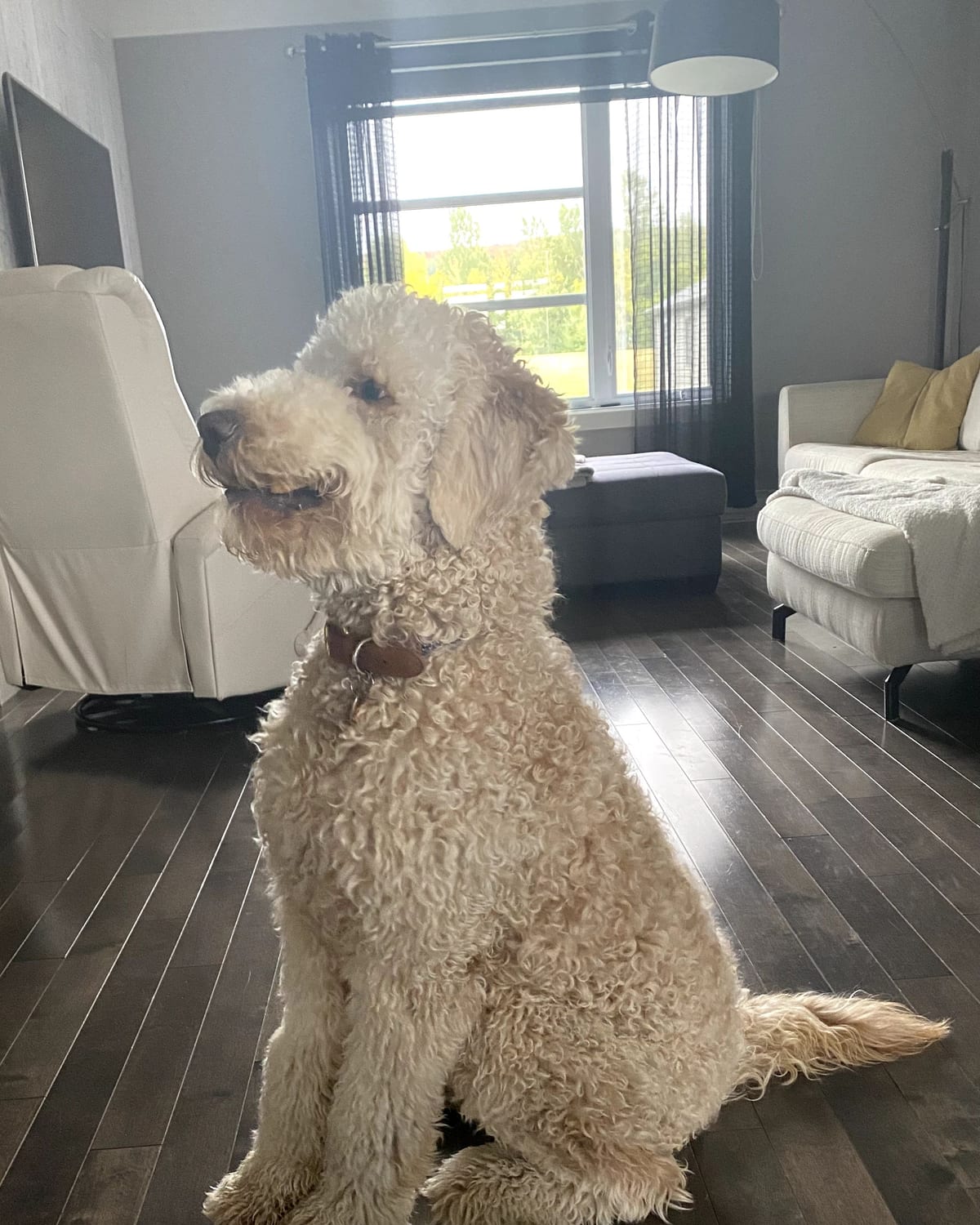
Developed over several generations crossing Labrador, Poodle and Cocker Spaniel lines, the Australian Labradoodle is known for its joyful temperament, easy trainability and low-shedding curly coat. An excellent family dog, including for households with young children.
Good to know: energetic and social, they need regular exercise and coat grooming every six to eight weeks.
Bernedoodle
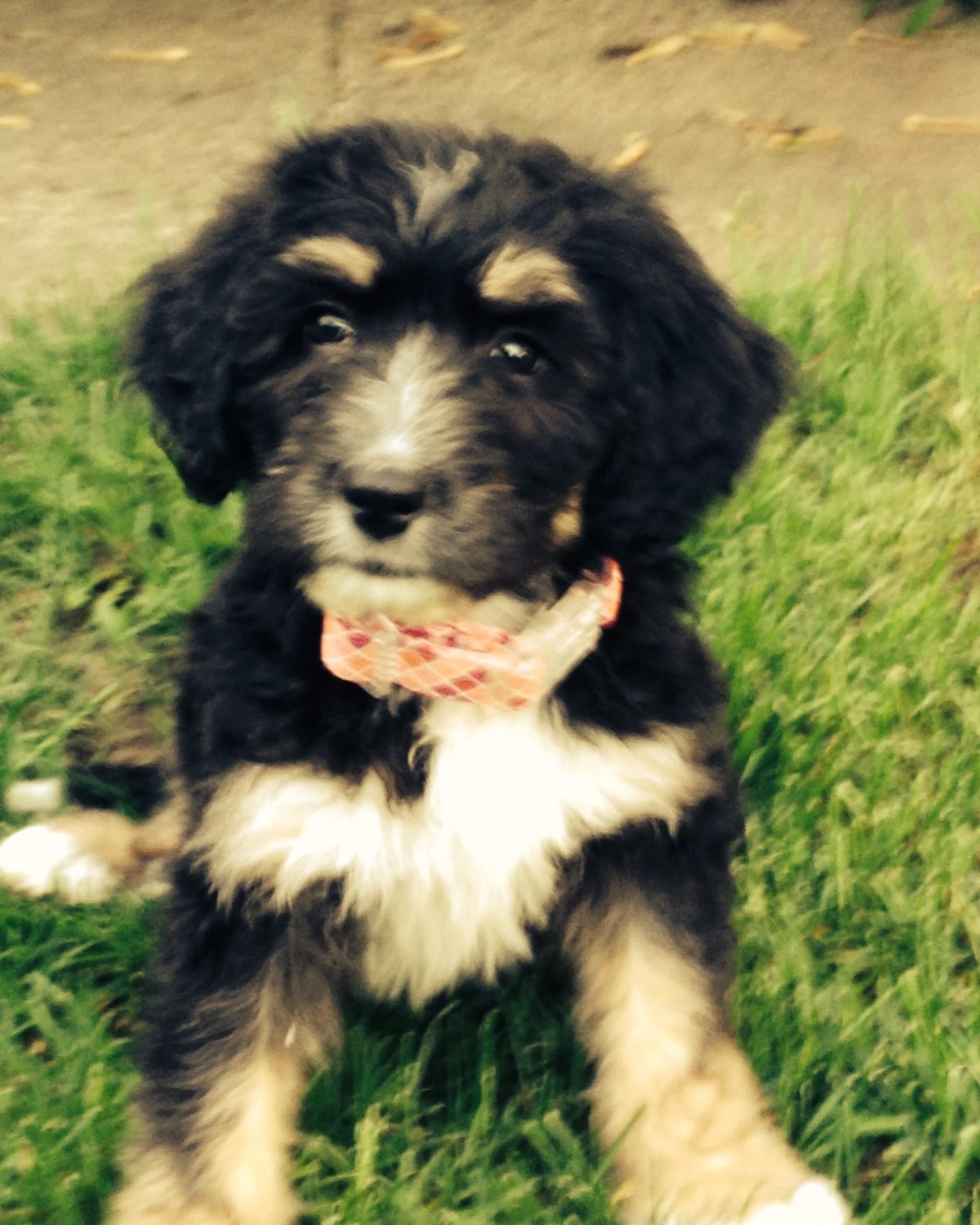
A cross between the Bernese Mountain Dog and the Poodle, the Bernedoodle inherits the Bernese's gentleness and loyalty, with a coat that sheds far less. Patient, affectionate, deeply attached to their family.
Good to know: they dislike being left alone for long periods and can reach a medium to large size depending on the parents' lines. We discuss this openly before any reservation.
The Australian Labradoodle and the Bernedoodle are hybrid breeds: they don't carry traditional purebred registration, apart from the ALAA lineage registry we use for our Australian Labradoodles. Crossing distinct bloodlines widens the gene pool and, on average, reduces the incidence of certain hereditary conditions — a deliberate choice, not a compromise.
What we test for, and what we guarantee.
No breeding takes place until both parents have completed the screenings recommended for their breeds of origin. You receive the certificates in person — not summarized, not "available on request."
Hips and elbows
X-rays evaluated by a recognized body, on both parents, before breeding.
Heart and eyes
Cardiac exam and annual ophthalmologic exam by a veterinary specialist.
Genetic panel
DNA testing for hereditary conditions known in the breeds of origin, so we never pair two carriers.
Two-year guarantee against serious hereditary conditions, provided in writing. Replacement or refund, your choice.
Come see for yourself before deciding.
We welcome families to the farm by appointment, even without a firm plan yet. You'll see where the puppies are born and raised, meet the parents, and ask the hard questions.
One piece of advice, even if you don't adopt from us: be wary of any breeder who offers to meet in a parking lot or refuses to show you the mother. It's the most reliable red flag there is.